Stop the Cycle: Why Your Credit Score Isn’t Moving
Stop the Cycle: Why Your Credit Score Isn’t Moving
And What Actually Changes It
Most people don’t realize they’re stuck in a credit cycle until it matters.
You apply for a loan.
Maybe you expect a chance.
Then you get another denial.
At that point, the score feels personal. From the lending side, it isn’t. The score isn’t the problem. It’s the signal.
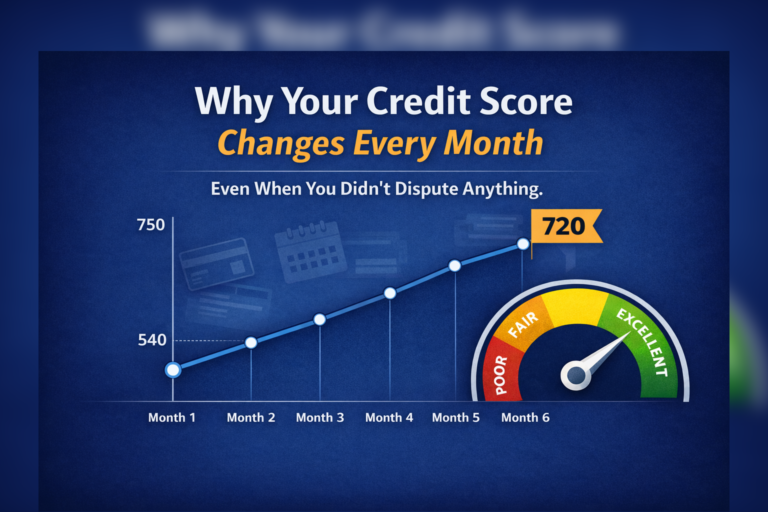
Credit scores don’t move because effort increases.
They move when risk changes.
Most credit damage isn’t caused by bad decisions, it’s caused by life interruptions. Scores move only when the risk from those disruptions is resolved.
What a Credit Score Really Represents
A credit score is a risk indicator. It doesn’t react to disputes or letter templates; it reacts when the behaviors that created the risk are corrected and sustained.
It summarizes reported credit behavior, including how payments are handled, how much credit is being used, how accounts are structured, and how recent activity looks.
That’s why two borrowers with similar scores can receive very different decisions.
Why People Stay Stuck Even While Taking Action
Most credit advice focuses on activity instead of interpretation.
Late payments hurt most when they’re recent. Consistent on-time payments going forward are what allow that impact to fade as the account ages.
Making minimum payments keeps accounts current, but high balances relative to limits still signal financial pressure.
Opening accounts can help but poorly timed credit adds risk instead of reducing it.
From a lender’s perspective, the question is simple:
Did the borrower reduce risk,
or did they just stay busy?
What Lenders Are Actually Evaluating
Payment history matters because it shows whether obligations were met as agreed and how recently problems occurred. A late payment last month reads very differently than one from years ago.
Utilization matters because it reflects real-time strain. High balances signal dependence on credit, not just usage.
Account age adds context, but it doesn’t override current risk. A long history with recent instability still reads as unstable.
New credit isn’t a problem by itself. What lenders look at is when it was added and what type of credit it was.
Lenders can tell when new credit comes from subprime lenders, higher-interest accounts typically approved when credit is already strained. Added before balances are under control or late payments have aged, this can signal ongoing strain, not recovery.
Credit mix plays a small role. Structure matters far more than variety.
None of these factors work alone.
They only matter when they tell the same story:
Stability after disruption.
Why “Raising Your Score” Keeps People Stuck
Chasing points leads to random moves.
Random moves don’t reduce risk.
That’s why people feel like they’re improving but still get denied. From the lender’s side, the file reads the same.
The score might shift.
The decision doesn’t.
What Actually Breaks the Cycle
Progress starts when actions are intentional.
Balances come down in a way that changes utilization.
Payments matter.
Past damage is addressed instead of avoided.
New credit is added only when it strengthens the overall structure.
This isn’t about tricks.
It’s about alignment.
When the structure improves, the score follows not the other way around.
The Bottom Line
Credit scores don’t rise because tips were followed.
They rise because risk changed.
If your score hasn’t moved, the issue usually isn’t effort.
It’s strategy.
Want to See What Lenders Actually See?
If you’re tired of guessing, a Lender Credit Audit shows how your report reads from the lending side and why it’s producing the outcomes you’re getting.
No tricks.
No vague advice.
Just clear, lender-logic direction.