Why a Dispute Letter Isn’t Always Step One | And What Actually Moves Your Score First
Why a Dispute Letter Isn’t Always Step One | And What Actually Moves Your Score First
The first step isn’t always a dispute letter.
In fact, for many people
it shouldn’t be the first step at all.
Some people don’t need letters.
They already have plenty of credit.
What they don’t have is structure.
And structure is what lenders actually read.
The Misunderstanding Most People Have About Credit Repair
Most people believe credit repair starts with removing negative items.
Collections.
Charge-offs.
Late payments.
And yes sometimes cleanup is necessary.
But here’s what most consumers never get told:
A dispute letter only addresses the past.
Lenders make decisions based primarily on the present.
What are you doing right now
with the credit you already have?
Because that’s what predicts future risk.
Not what happened three years ago.
Not a collection that’s already aging off.
Right now.
The Lender Logic Most People Miss Completely
Revolving debt utilization moves scores faster
than almost anything else on a report.
Not inquiries.
Not old late payments.
Not even most collections.
Utilization.
How much of your available revolving credit are you using?
When balances are high relative to limits,
the scoring model reads it as:
Higher risk.
Potential cash flow stress.
Increased likelihood of default.
When balances drop,
the story changes immediately.
Lower utilization signals:
Control.
Stability.
Capacity.
Reduced dependency on borrowed money.
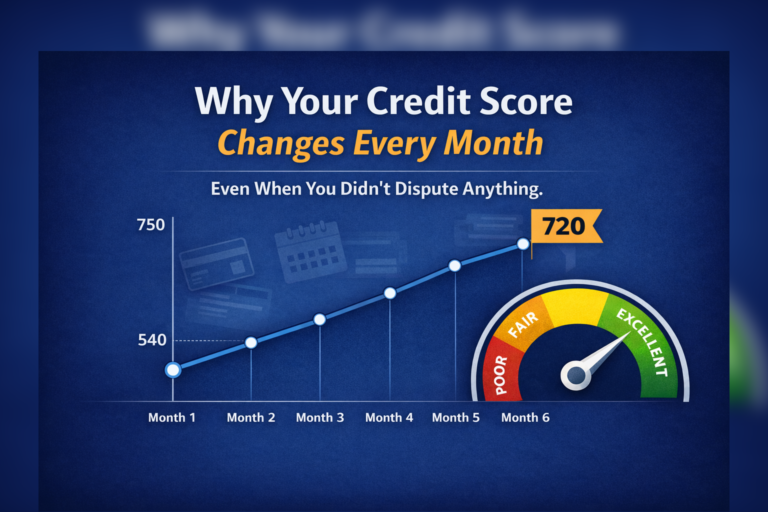
That shift alone can move a score significantly
often within a single reporting cycle.
No letters required.
Reducing what you owe on open accounts
tells a completely different story to a lender
than removing something negative.
One shows current behavior.
The other just cleans up the past.
Scoring models heavily weight current behavior.
Why Deleting the Past Doesn’t Always Fix the Present
Let’s look at a real scenario.
Someone has:
Three maxed-out credit cards.
85–95% utilization across the board.
No recent late payments.
One small collection from two years ago.
They focus entirely on disputing that collection.
Even if it’s removed
the revolving balances are still screaming risk
to every lender who pulls that file.
From a lender’s perspective the question becomes:
“Why are these cards nearly maxed out?”
That question matters more
than a small, aging collection.
The foundation is unstable.
That’s why dispute-first strategies
so often disappoint people.
They clean up the appearance
but leave the structural risk completely untouched.
The Three Scenarios Most People Fall Into
When I review a credit file,
it almost always falls into one of three categories.
The Utilization Problem
These individuals already have multiple open revolving accounts,
decent payment history,
and enough total available credit.
Their issue is high balances.
Their first move should be
reducing revolving debt strategically
not sending dispute letters.
Dropping utilization below key scoring thresholds
50%, then 30%, ideally under 10%
produces faster results than any letter campaign.
The Thin or Imbalanced File
Some people don’t have enough revolving accounts at all.
Maybe they only have installment loans,
one card with a low limit,
or authorized user accounts.
The file lacks scoring depth.
Their first move may be adding the right type of revolving account
not disputing old items.
The scoring model needs current, active revolving behavior to optimize.
You can’t optimize what doesn’t exist.
The Hybrid Situation
Some people need both
utilization reduction and strategic account additions.
But even then,
dispute letters are rarely the first move.
Because restructuring open accounts
often creates score movement
before any cleanup even begins.
And momentum matters when you’re rebuilding.
Why Utilization Moves Scores So Fast
Revolving utilization is dynamic.
It updates every single month.
It responds immediately to balance changes.
Unlike late payments or charge-offs
that age slowly over years
utilization reflects what’s happening right now.
If you owe $8,000 on a $10,000 limit,
the model reacts.
If you pay that down to $2,000,
the model reacts again
usually very favorably.
That’s because lenders care most about present risk.
And utilization is the clearest signal
of how you’re managing credit today.
The Hard Truth Nobody in Credit Repair Wants to Say
Very few people actually need dispute letters as the first move.
Most people need:
Balance restructuring.
Strategic payoff sequencing.
Reporting optimization.
Account mix correction.
But “pay this down strategically”
doesn’t sound as exciting as “remove everything.”
The problem is
exciting doesn’t equal effective.
Templates and 30-day promises
create the illusion of progress.
Restructuring creates actual movement.
Credit is not a 30-day fix.
It is a long game.
And the long game requires structure
not chaos dressed up as a strategy.
What Actually Moves Your Score First
If you want real movement, focus on:
Revolving utilization percentage.
Individual card utilization not just the overall number.
Reporting timing.
Account mix.
Payment consistency.
Those five areas produce measurable shifts
faster than disputing a single negative item
in most cases.
Cleanup has its place.
But rebuilding and restructuring
create the leverage that actually changes approvals.
The Bigger Strategy Nobody Teaches You
Credit repair isn’t about fighting the system.
It’s about understanding the system.
Lenders are asking one question
every single time they pull your file:
“How is this person managing credit today?”
If the answer is high balances,
minimal available credit,
and heavy reliance on revolving debt
no dispute letter will override that signal.
But restructuring can.
Final Thought
The first step isn’t always a dispute letter.
Sometimes the smartest move
isn’t removing something.
It’s repositioning what’s already there.
Because one strategy cleans up the past.
The other changes the story
your credit file is telling right now.
And lenders always care more
about the current story.
Not sure which scenario your file falls into?
That’s exactly what a Credit Audit is for.
A former underwriter reviews your report the way
a lender actually would and tells you what to address first.
No templates. No guesswork.
Just a clear picture of where you actually stand.
Follow RealTalk Credit for lender-perspective education
so you can have top-notch credit too.