Why Your Credit Score Changes Every Month
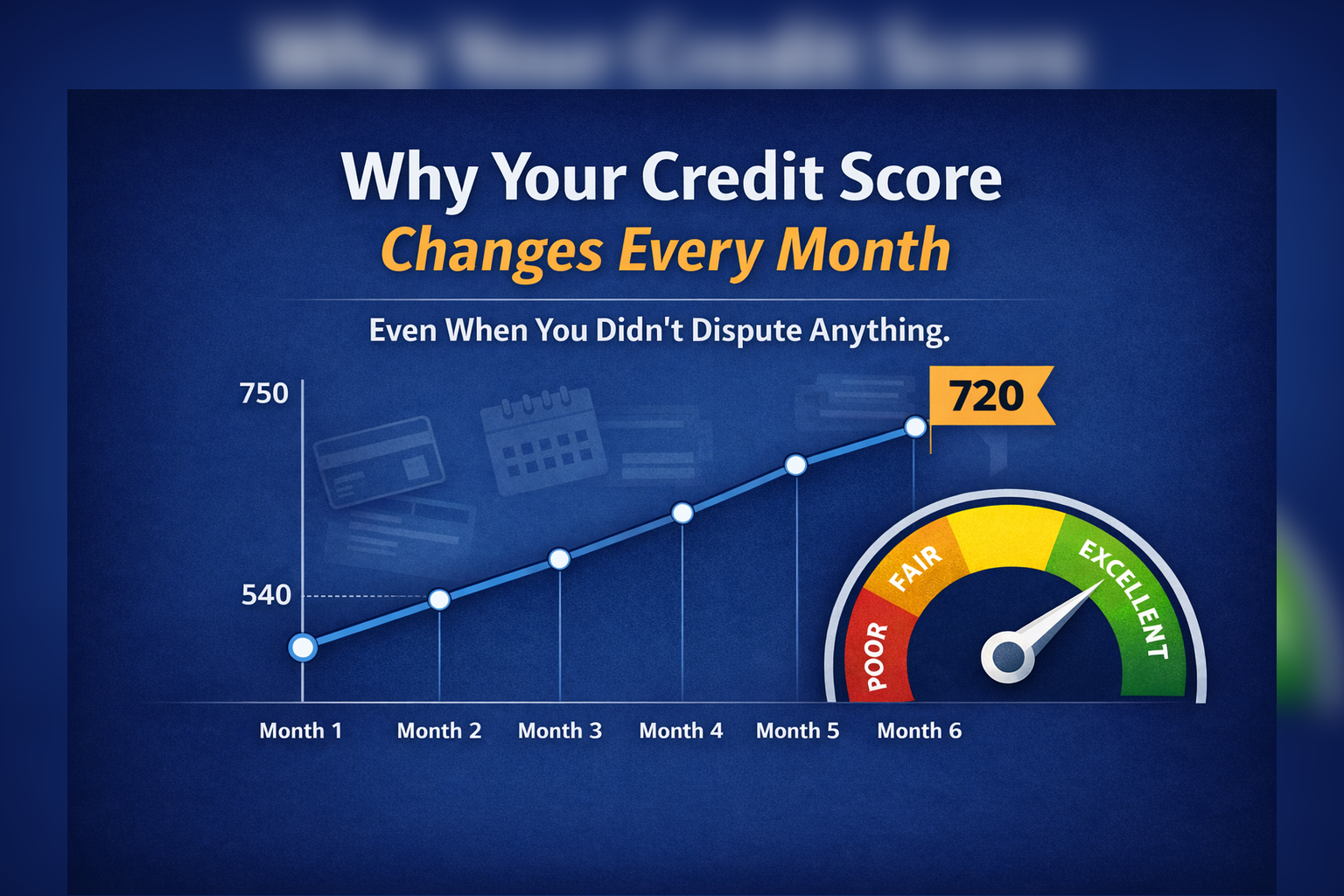
Why Your Credit Score Changes Every Month
Even When You Didn’t Dispute Anything
Many people assume credit scores only change when something “bad” happens or when a dispute or validation letter is sent.
That’s not how credit works.
Credit scores are always moving because credit activity is always being reported. Every month, lenders update balances, statuses, and payment history. Scoring models respond to those updates whether you took action or not.
Understanding this is critical because reacting to normal score movement as if it’s a problem often creates more damage than the original change.
Credit Scores Are Dynamic, Not Fixed
A credit score is not a grade you earn once and keep.
It is a risk snapshot, recalculated every time new data is reported.
That includes:
- Balance updates
- Payment history changes
- Account aging
- New accounts
- Inquiries
- Status updates on negative accounts
That’s why scores can move even when you feel like nothing happened.
Something did happen. It just wasn’t a dispute.
Why the Same Event Hits Different Scores Differently
One of the most misunderstood parts of credit is score elasticity.
The higher the score, the more sensitive it is to negative activity.
The lower the score, the less room there is to fall but recovery takes longer.
Example:
- An inquiry on an 840 file may cause a noticeable drop
- The same inquiry on a 640 file may barely register
- On a 520 file, it may be irrelevant compared to larger risk factors
This is why point loss (and recovery) cannot be measured the same way across all credit profiles.
Common Credit Activities That Move Scores (No Disputes Required)
Hard Inquiry
A hard inquiry can cause a short-term dip. Recovery usually begins within a few months and fades as the inquiry ages.
Impact depends on:
- Existing score tier
- Recent inquiry history
- Overall file strength
New Account Opened
Opening a new account can cause a temporary drop due to:
- Reduced average age
- New risk exposure
Over time, on-time payments help offset this but the benefit is not immediate.
Credit Card Balance Updates
This is one of the most frequent causes of monthly score changes.
Balances are reported based on statement dates, not due dates. Paying after the statement cuts does not prevent the balance from reporting.
Utilization shifts can move scores up or down even when payments are on time.
First Late Payment (30 Days Late)
A first late payment is one of the most damaging early events on a relatively clean file.
On a 680–720 score, a first 30-day late typically results in: 60–90 point drop
The higher the starting score, the sharper the initial drop feels. Recovery is gradual and depends on consistent on-time payments afterward. The impact softens as the late ages, but it does not disappear quickly
Multiple Late Payments
Multiple late payments signal a pattern, not a one-time disruption.
On a 680–720 score, multiple lates can lead to: 100+ points of cumulative impact
Each additional late compound risks and extends recovery time. Lenders focus less on the individual payments and more on what repeated lateness suggests about cash-flow stability.
Charge-Off
A charge-off is a major negative event regardless of payment status.
On a 680–720 score, a charge-off commonly causes: 100–150+ point drop
Paying a charge-off does not remove it. The account remains a charge-off and continues to affect risk. Improvement comes from aging, balance resolution, and post-event stability, not from payment alone.
Important Context
These are average ranges, not guarantees. Actual impact varies based on:
- Overall file thickness
- Existing negative history
- Utilization at the time of the event
- Time since last derogatory mark
This keeps the content accurate, defensible, and aligned with how scoring models actually work.
Paid Charge-Off (Example of Impact)
Paying a charge-off does not usually create an immediate score increase.
Example (680–720 Starting Score)
A borrower has a 700 score and a credit card that is charged off with a $4,500 balance.
What happens when it charges off:
- Score drops ~100–150 points
- Risk spikes because the account moved from delinquent to charged off
What happens when it is paid later:
- Balance updates to $0
- Status changes to “paid charge-off”
Score change: often minimal or none at first
This is where confusion sets in.
Even though the balance risk is reduced, the negative status remains. Scoring models still see a recent, severe derogatory event.
What Improves Over Time Instead
Over the next 12–24 months, improvement typically comes from:
- The charge-off aging
- No new late payments or derogatory
- Consistent on-time behavior on other accounts
- Lower overall utilization
As stability builds, the impact of the charge-off gradually weakens, allowing the score to recover slowly, not instantly.
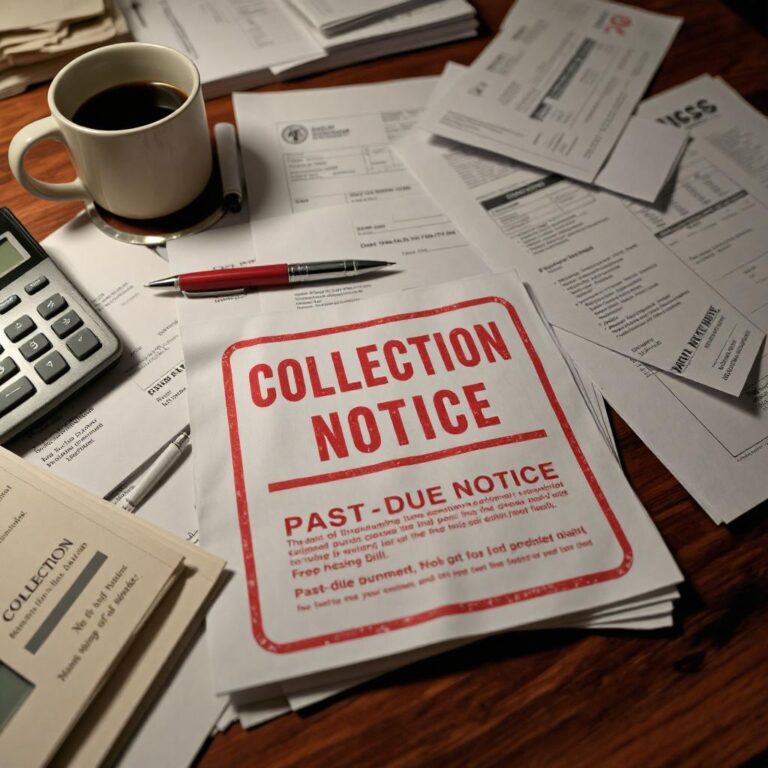
New Collection (Example of Impact)
Collections vary in impact based on file strength, amount, timing, and whether the account is paid or unpaid.
Example (680–720 Starting Score)
A borrower has a 710 score when a $900 medical collection first reports.
When the collection hits:
- Score drops ~60–110 points
- The drop is sharper on cleaner files because the collection is a new, severe derogatory
If the collection remains unpaid:
- The negative impact stays heavy
- Lenders see unresolved risk
- Recovery is limited until the account ages or is resolved
If the collection is paid shortly after reporting:
- Balance updates to $0
- Status changes to “paid collection”
- Immediate score improvement is often small or none
This surprises many borrowers.
What Improves Over Time
Over the next 6–18 months, recovery typically comes from:
- The collection aging
- No new derogatories
- Consistent on-time payments elsewhere
- Reduced utilization across revolving accounts
As time passes, the scoring impact of the collection weakens, and paying the collection allows recovery to begin as stability replaces risk.
Why This Confuses People
Paying a collection does matter just not always in the same month you make the payment.
From a scoring perspective, payment removes ongoing balance risk and allows the negative mark to begin aging without new damage being added. While the score may not jump immediately, the account becomes easier to recover from over time.
An unpaid collection continues to signal unresolved risk every month it remains open. A paid collection, on the other hand, allows stability to take over.
This is why paying collections is often a long-term credit decision, not a short-term score play and why timing and strategy matter.
Unpaid collections keep hurting. Paid collections stop adding new damage and give your credit room to heal.
Actual score changes vary based on the full credit profile, reporting behavior, and the age of the collection.
Paid Collection (How Payment Actually Helps)
Paying a collection does not erase its history, but it does change how the risk is read.
Once paid:
- The outstanding risk is removed
- The account can begin aging without new damage
- Future positive behavior has more room to offset the negative
This works the same way a paid charge-off does. The impact does not disappear immediately, but it weakens over time as stability replaces risk.
That’s why paying a collection is a strategic credit decision, not a panic move and why patience produces better results than reacting to short-term score fluctuation
Unpaid collections keep signaling risk. Paid collections allow recovery to begin.
Why Monthly Score Changes Don’t Mean Something Is “Wrong”
Most score movement is normal reporting behavior, not a sign that you need to dispute something.
Disputes exist for accuracy.
They do not control:
- Utilization timing
- Account aging
- Risk weighting
- Severity differences
Using letters to manage normal score movement is like using a hammer for every repair.
What Actually Helps You Stay in Control
The key is not stopping score movement.
It’s understanding what the movement means.
Is this a short-term fluctuation or a long-term risk signal?
Does this matter for approval, or just for monitoring?
Is action needed now or would action make it worse?
This is where most people get stuck.
The Bottom Line
Credit scores are not broken, random, or emotional; they are responsive.
Most monthly score changes are the result of:
- Normal reporting cycles
- Balance timing
- Aging both good and bad
- How recent risk is weighted
Negative events hurt most at first, then weaken as time and stability replace them.
Positive actions often work quietly, compounding instead of spiking.
That’s why progress can feel slow and why panic moves usually backfire.
When you understand what changed, why it changed, and how lenders read it, you stop reacting and start rebuilding with intention.
Want to Understand What Your Score Changes Actually Mean?
The Letter Logic + Approval Decoder bundle was built for this exact situation.
It helps you:
- Decode why your score moved
- Understand how lenders interpret those changes
- Know when letters matter and when they don’t
- Avoid reactive credit moves that stall rebuilding
No myths. No templates without context. Just lender logic and clear decision-making.
If you’re tired of guessing why your credit score changes every month, this is the next step.